MVP Development: How to Launch a Web or Mobile App Faster
MVP development explained for Indonesian businesses: what an MVP is, how to scope one in five steps, typical timelines, costs and the mistakes to avoid.
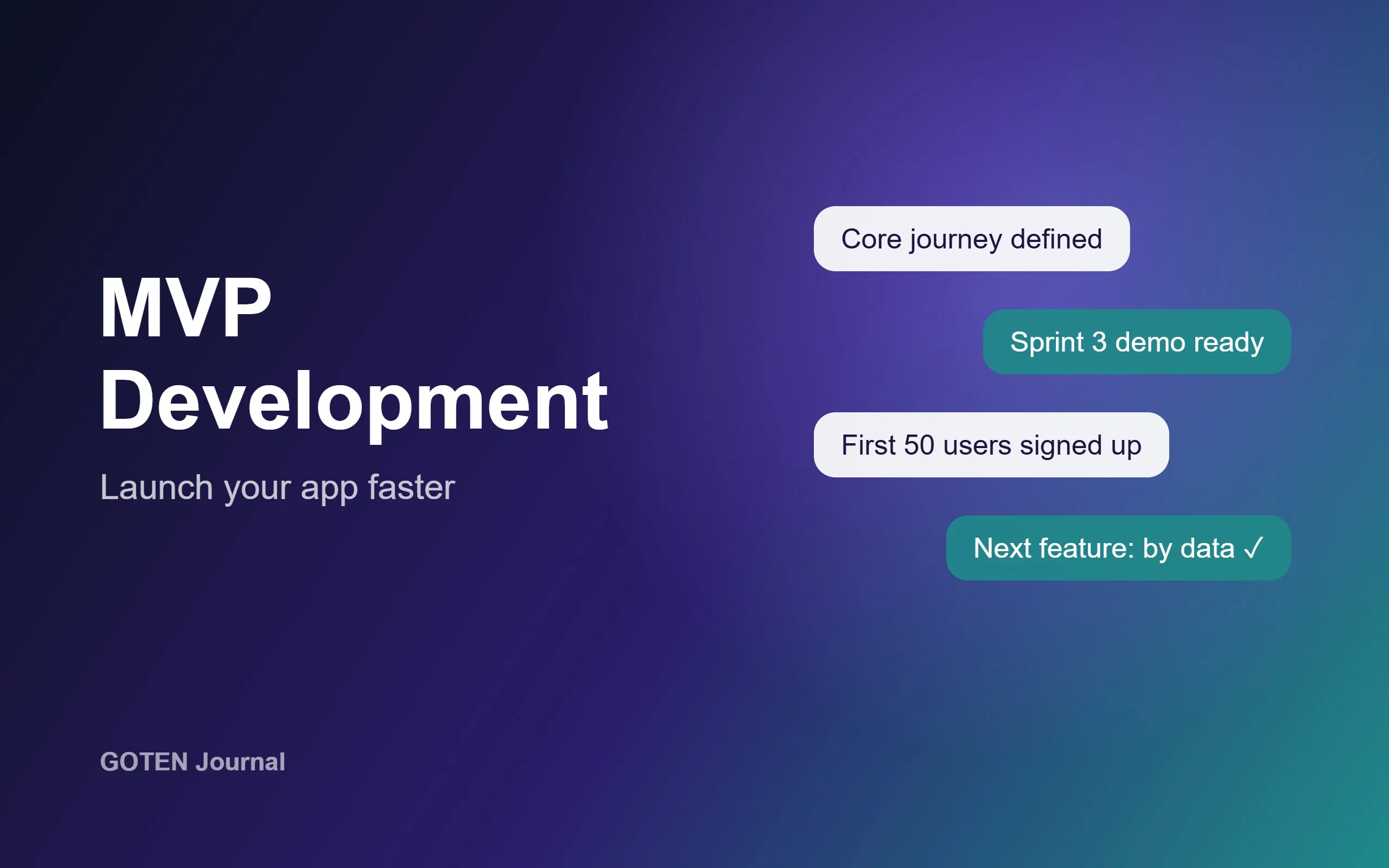
Many app ideas fail not because they are bad, but because they take too long and cost too much before real users ever try them. MVP development solves this by launching the smallest version of your product that delivers real value, then improving it with real feedback. This guide explains what an MVP is, how to scope one, how long MVP development usually takes and the mistakes that turn a quick launch into a slow, expensive project.
What an MVP is, and what it is not
An MVP, or minimum viable product, is the simplest version of a web or mobile app that solves one clear problem for one clear group of users. It is:
- Minimum: only the features needed for the core job.
- Viable: good enough that people actually use it, trust it and, ideally, pay for it.
- A product: real software with real users, not just slides or a clickable mock-up.
An MVP is not a buggy, half-finished app. Quality still matters; scope is what gets smaller.
Why MVP development makes sense for Indonesian businesses
- Lower risk. You spend a fraction of the full budget before learning whether the idea works.
- Faster learning. Real usage beats assumptions about what customers want.
- Easier fundraising and buy-in. Investors and managers trust working software with early users more than plans.
- Better final product. Features added later are based on evidence, not guesses.
How to scope an MVP in five steps
- Define the problem and the user. Write one sentence: "We help [user] do [job] without [pain]." If you cannot, the scope is not ready.
- Map the core journey. List the steps a user must take to get value, for example sign up, choose a class, pay and receive a confirmation.
- Cut everything else. Reports, advanced settings, multiple languages and loyalty programmes can usually wait.
- Choose the platform. A responsive web app is often the fastest start. Our guide to web development vs app development helps you decide.
- Set success measures. Decide what numbers will tell you the MVP worked: sign-ups, active users, orders or retention after 30 days.
How long does MVP development take?
For a focused web app with one core journey, MVP development often takes around 6 to 12 weeks from discovery to launch. Mobile apps, payment integrations, complex admin tools or strict compliance needs extend that timeline. The biggest factor is not the technology but how quickly decisions are made and how disciplined the scope stays.
A typical timeline looks like this:
- Weeks 1 to 2: discovery, user flows and wireframes.
- Weeks 2 to 4: UI design for the core screens.
- Weeks 3 to 9: development in short sprints with regular demos.
- Weeks 9 to 12: testing, fixes, launch and first user feedback.
The full step-by-step view is in our article on the web & app development process.
Test with real users early
Do not wait for launch to hear from users. Show clickable designs to five or six target users and watch where they get stuck; even small usability tests reveal most major problems, as explained in this introduction to usability testing from Nielsen Norman Group. After launch, combine analytics with short interviews to understand why people behave as they do.
Common MVP mistakes
- Too many features. Every "small" extra adds design, development, testing and maintenance.
- No clear user. Building for "everyone" produces a product that fits no one well.
- Skipping the admin side. Someone has to manage users, content and orders; plan a simple admin panel.
- Choosing a dead-end technology. A quick hack that cannot grow forces a costly rebuild. Our guide to choosing a web app tech stack covers sensible defaults.
- No plan after launch. Budget time and money for improvements based on what users do.
What it costs
The cost of an MVP depends on the number of screens, user roles, integrations and platforms. Because the scope is intentionally small, it is usually a fraction of a full product budget. For the main cost drivers and typical ranges, read web & app development cost in Indonesia.
After the MVP: grow with evidence
Once the MVP is live, review the numbers every two to four weeks. Keep improving the core journey before adding new modules. Add features only when users ask for them repeatedly or the data shows a clear gap. Many successful products grow this way: one solid journey first, then reports, automations and mobile apps later. A membership system, for example, can start with sign-up, class booking and payment, and only later add attendance analytics, coach dashboards and a mobile app once members are using it every week.
FAQ
Should an MVP be a web app or a mobile app?
For most businesses, a responsive web app is faster and cheaper to launch and update. Build native mobile apps once you know users need features such as offline use or push notifications.
Can an MVP grow into the full product?
Yes, if it is built on a solid, mainstream stack with clean code. That is why "minimum" should apply to features, not to quality.
How many features should an MVP have?
As few as possible to complete the core journey. If a feature does not help the first users get value, move it to the next phase.
Build your MVP with GOTEN
We help Indonesian businesses and founders scope, design and build MVPs with React and Node.js, then grow them based on real usage. See our web & app development services or read the full web & app development guide.