AI for Sales: Faster Follow-Ups Without Losing the Human Touch
How Indonesian businesses use AI for sales: instant lead replies, qualification, quotation drafts, follow-up reminders and call summaries, with people still making the decisions.
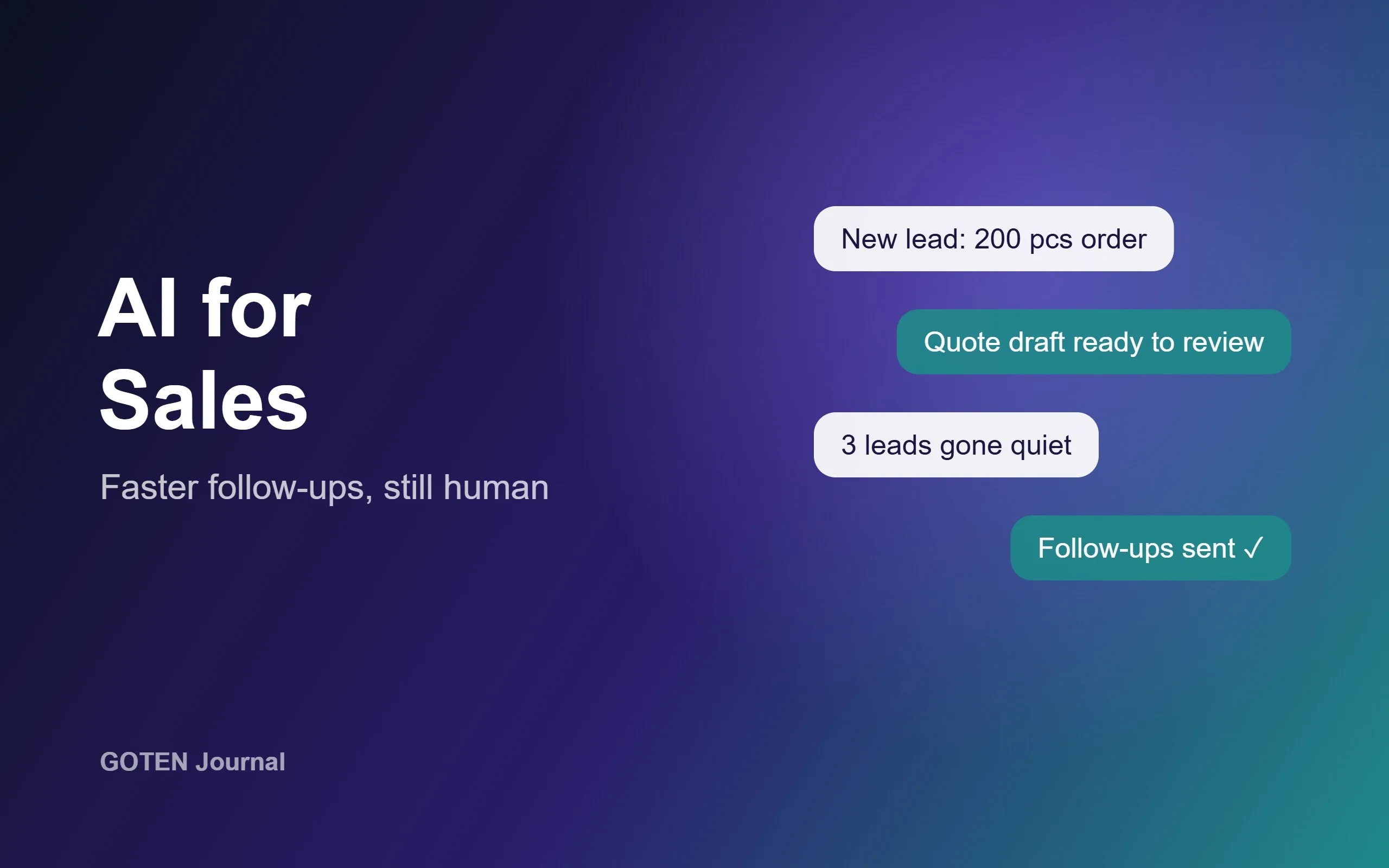
Sales teams lose deals in quiet ways: a lead that waited a day for a reply, a quotation that took a week, a follow-up nobody remembered to send. AI for sales does not replace good salespeople. It removes the slow, repetitive work around them so they spend more time talking to buyers. This guide shows practical ways Indonesian businesses use AI for sales today, what to keep human and how to start without a big system change.
Where AI for sales helps most
1. Instant first replies to new leads
When someone asks about a product on WhatsApp or your website at 10 pm, an AI assistant can reply within seconds, answer basic questions and collect what the sales team needs: product interest, quantity, location, budget and timeline. The salesperson starts the next morning with a qualified lead instead of a cold "hello". Our comparison of AI chatbot vs live chat explains how this hand-off works.
2. Lead qualification and routing
AI can score leads based on the answers they give and route them to the right person: big B2B orders to a senior account manager, small retail questions to the online team, out-of-area requests to a partner.
3. Drafting quotations and proposals
Given a customer request and your price list, AI can prepare a first draft of a quotation or proposal in your template. The salesperson checks prices, adjusts terms and sends it, turning hours of formatting into minutes of review.
4. Follow-up reminders and drafts
AI can review open conversations every morning, highlight leads that have gone quiet and draft a personalised follow-up for each one. The salesperson approves and sends. This simple routine often recovers deals that would otherwise be forgotten.
5. Call and meeting summaries
Notes from calls or meetings can be summarised into needs, objections, next steps and dates, then saved to the CRM or a shared sheet so the whole team sees the same picture.
6. Sales insights
By reading chats and notes, AI can show which products people ask about most, the common objections and the questions that come right before a purchase. Marketing and product teams can act on that.
What to keep human
- Negotiation and pricing exceptions. Discounts and special terms need judgment and authority.
- Relationship building. Key accounts expect a real person who knows their business.
- Final approval of messages. Especially in the first months, a person should approve AI-drafted quotes and follow-ups.
- Complaints and sensitive topics. These go to people immediately.
A good rule: AI prepares, people decide. This is the same principle behind safe AI agents for business.
How to start with AI for sales
- Map your current process. Where do leads come from, who replies, how are quotes made and how are follow-ups tracked?
- Find the biggest delay. Slow first replies, slow quotes or forgotten follow-ups are the usual suspects.
- Clean the basics. An up-to-date price list, product information and a single place where leads are recorded.
- Pilot one use case. For example, instant first replies on WhatsApp for one product line. Our 30-day AI pilot plan shows how.
- Measure and expand. Track response time, conversion rate and time saved, then add the next use case.
Metrics that show it is working
- Average first response time to new leads.
- Lead-to-quote time and quote-to-order conversion.
- Number of follow-ups sent per week and deals recovered from quiet leads.
- Hours per week salespeople spend on admin versus selling.
Data, consent and trust
Sales data includes names, phone numbers and purchase history, which are personal data under Indonesia's Personal Data Protection Law (UU PDP). Only message people who have contacted you or agreed to receive messages, store data in systems you control and tell customers when they are chatting with an assistant. Our AI data privacy checklist lists the questions to answer before launch.
Common mistakes
- Automating spam. Mass messages generated by AI damage your brand and can break WhatsApp rules.
- Outdated price lists. The AI will confidently quote old prices if you let it.
- No owner. Someone in sales must review results and keep information current.
- Skipping the CRM basics. AI works best when leads and conversations are recorded in one place.
FAQ
Is AI for sales only for large companies?
No. Small teams often benefit most, because one or two salespeople cannot reply instantly to every lead or remember every follow-up.
Do we need a CRM first?
It helps, but a well-structured spreadsheet or WhatsApp Business setup is enough to start. Many businesses add a CRM once the process is clear.
What does it cost?
Costs depend on channels, integrations and volume. Read AI for business cost for the main drivers.
A day with AI-assisted selling
Imagine a distributor of building materials. Overnight, the AI assistant answered twelve WhatsApp enquiries, asked each buyer for product, quantity and delivery city, and tagged three of them as large project orders. At 8 am the sales manager opens one summary: the three priority leads, two draft quotations waiting for review and five customers who have not replied for a week, each with a suggested follow-up message. By 9 am the quotes are checked and sent, and the follow-ups approved in one batch. The rest of the day goes to calls, site visits and negotiation, the parts of selling that only people can do well.
Nothing in this routine is magic. It simply removes waiting and forgetting from the sales process, which is where many deals quietly disappear.
Sell faster with GOTEN
We build AI assistants for lead replies, quotations and follow-ups that work alongside your sales team on WhatsApp and the web. See our AI solution development services or read the full AI for business guide.